What Is SEO?
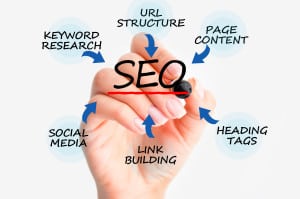
Search engine optimisation is the work of making a website the most useful and most credible answer to a question someone is typing into Google.
That’s the whole thing. Everything else — the technical work, the content, the Google Business Profile, the links — exists to serve that one goal.
The reason it matters is straightforward. Building a website doesn’t put you in front of anyone. Google has to find your pages, understand what you do and where you do it, and then decide you’re a better answer than the businesses already ranking. None of that happens on its own.
This page explains what’s actually involved, what’s changed recently, and which widely-repeated tactics are a waste of your money. If you’d rather talk it through, contact us or call 0408 085 438.
What’s Changed, and What Hasn’t
SEO has a reputation for changing constantly. That’s half true, and the half that’s false costs business owners a lot of money.
What hasn’t changed since roughly 2015: Google is trying to identify the page that best answers the query. Genuinely useful content, a site that works properly on a phone, clear information about who you are and where you operate, and being mentioned by other credible sources. These have been the fundamentals for a decade, and Google has publicly confirmed they remain the foundation for its AI features too.
What has changed: the mechanical tricks stopped working, and Google got much better at spotting them. It ran two broad core updates in the first half of 2026, in March and May, plus three separate spam updates. Sites relying on volume and repetition tend to lose ground with each one. Sites with real expertise and original material tend to hold or gain.
What’s changing right now: AI-generated summaries increasingly sit above the traditional results. A growing share of searches are answered without anyone clicking through to a website at all. For local businesses, more of the decision is being made inside Google Maps and Google Business Profile than on your website. This doesn’t make SEO obsolete — those AI answers are assembled from the same web Google has always indexed — but it does change what “success” looks like, which we cover further down.
The Four Things That Actually Move the Needle
1. Content that answers a real question
Every page should exist because someone is searching for what’s on it.
That sounds obvious, and it’s still where most small business websites fall down. A page headed “Our Services” listing eight things in one paragraph will rarely rank for any of them. Eight pages, each answering one question properly, has a genuine chance.
For a local trade or service business, the pages that earn enquiries are usually:
One page per service you actually want more of
One page per town you genuinely service, with real content about your work there — not the same page with the town name swapped in
Answers to the questions customers ask before they call: cost, timeframe, process, what could go wrong
Case studies of work you’ve done, with the actual outcome
Write for the person, not the search engine. If a page reads like it was assembled to hit a keyword, both Google and your prospective customer will notice.
2. Technical foundations
The technical side is unglamorous and it’s mostly about not getting in your own way.
Mobile. Google indexes the mobile version of your site. If it’s slow or awkward on a phone, that’s the version being judged.
Speed. Google measures loading, responsiveness and visual stability through Core Web Vitals. It’s a modest ranking factor, but a slow site loses visitors regardless of where it ranks.
Crawlability. An XML sitemap, a sensible robots.txt, and Search Console connected. This is how you tell Google your pages exist.
Structure. Clear navigation and sensible internal links between related pages. This helps Google understand which of your pages matter and how they relate.
Titles and headings. One clear H1 per page describing what the page is about, in language a customer would use.
Structured data. LocalBusiness markup telling Google your name, address, phone, hours and service area in a format it can read without guessing.
HTTPS. Non-negotiable, and has been for years.
3. Local signals
For a business serving a specific area, this is where most of the visibility comes from.
Google has said publicly that local results are ranked on three things: relevance (does what you offer match what was searched), distance (how close you are to the searcher), and prominence (how well known and well regarded you are).
You can’t change distance. You can change the other two.
Google Business Profile. Claimed, verified, complete, and kept current. Correct primary category, accurate hours, real photos of your actual work. This is the single highest-leverage asset for a local business, and increasingly it’s where the customer makes their decision — not on your website.
Reviews. Both the number and what they say. Reviews that mention the specific service and the specific town are worth more than a bare five stars, because they give Google language to match against. Ask customers directly. Don’t buy them.
Consistent details. Your business name, address and phone number should be identical everywhere they appear — your site, Google, Facebook, industry directories, association listings. Conflicting versions make Google less confident about who you are.
Local relevance on the site itself. Real content about the areas you work in, photographs of local jobs, mentions of local suppliers or landmarks.
4. Links and mentions worth having
Links from other websites still function as endorsements. What’s changed is that quality now matters far more than quantity, and manipulative link building is explicitly against Google’s policies.
For a small regional business, the links worth having are the ones you’d want anyway:
Sponsoring a local club, show or sporting association
Industry body and trade association listings
Supplier and manufacturer “where to buy” or “approved installer” pages
Local news coverage of something you’ve actually done
Being genuinely useful enough that someone links to you without being asked
That’s a slower list than any agency selling link packages will give you. It’s also the one that survives Google’s spam updates.
SEO and AI Answers
A fair question in 2026: does any of this still matter when Google answers the question itself?
Some honest observations rather than predictions.
AI Overviews and AI Mode are assembled from indexed web content. If your site isn’t crawlable, clear, and credible, it isn’t in the pool of sources being drawn from. The technical and content fundamentals above are the entry requirement, not an alternative to it.
Consistency across sources matters more than it used to. If your business is described the same way on your site, your Google profile, your directory listings and your social profiles, an AI system can state facts about you with confidence. If those sources contradict each other, it may say nothing at all.
Impressions can rise while clicks fall. If your traffic drops but your rankings haven’t, an AI summary answering the question above your result is a common cause. That’s worth measuring properly before assuming something has gone wrong.
And a note of caution: Google extended its spam policies in 2026 to explicitly cover attempts to manipulate generative AI responses. The “AI SEO” tactics being sold aggressively right now are, in many cases, the same manipulation that Google has spent twenty years learning to detect.
Customers Reviews
Ben LWe were surprised at how many members found our business via the website. The website is the first point of contact.read moreread less
Warragul Little AthleticsOur Website was hacked & there were various malware warnings. SME Design site was cleaned of all malware in an efficient manner. We now have a new website That is mobile compatible, easy to navigate and is secure to minimise the risk of hacking.read moreread less
Inversion TablesAmazon Affiliate Site Ranking in the USA. Ranking on Page 1 of Google for some relevant keywords.read moreread less
WGHA CommitteeThanks for creating & updating the website. SME Design manages our all our digital communications. An exceptionally cost effective way to keep in Touch and stay connected to our members as well as being found by new members.read moreread less
LyndaOur customers are from all over South Gippsland, but also Cranbourne and Pakenham. We wanted to be found. We rank number 1 for the search terms. We can update the site and receive support from Mark. Thanks.read moreread less
Phoenix Vital LifeA simple "Business Card" Site.read moreread less
Air GunAmazon Affiliate Site Ranking in USA deriving income from Sales of product.read moreread less
ISOQuestThanks for your assistance. We lost our domain and Website. SME Design sorted it all out.read moreread less
Spider LeeThanks Mark for setting up the site and your support after it was completed.read moreread less
DiWe wanted a clear Easy to Navigate website that we could update ourselves. Thank You.read moreread less
Paul HWe have had an increase in Club Membership due to the Website. We have members throughout Gippsland. People can find us easily.read moreread less
Gary BThank You for everything have so much work from the Website it is tremendous. You did a great job.read moreread less
Mel BakerThanks SME Design. Our high Search Rankings have allowed us to reduce our advertising costs.read moreread less