

Demystifying Digital Marketing for Small Business Owners
Servicing Small to Medium Businesses
Digital Marketing Without the Jargon
If you’ve sat through a sales pitch full of acronyms — SEO, PPC, CTR, ROI — and walked away more confused than when you started, you’re not alone. The digital marketing industry has a habit of overcomplicating things that are, at their core, pretty straightforward.
Here’s the simple version: digital marketing is just using the internet to help people find your business, understand what you offer, and choose to contact you. That’s it. Everything else — the tools, platforms and strategies — is just the how.
This guide cuts through the noise. It explains what actually matters for a small business, what you can safely ignore, and how to spend your time and money where it makes a real difference.
Why digital marketing works for small businesses
Traditional advertising — local paper ads, letterbox drops, Yellow Pages — is expensive and hard to measure. You spend money, and then you hope. Digital marketing is different in one fundamental way: you can see exactly what’s working.
You control the budget
Start small, test what works, and only scale up when you’re seeing results. No minimum spend, no locked-in contracts.
You reach the right people
Instead of broadcasting to everyone, you target people actively searching for what you offer — in your town, your suburb, your industry.
You can measure everything
How many people visited your site, where they came from, what they clicked. Numbers, not guesswork.
You can adapt quickly
Something not working? Change it this week. No waiting for the next print run or ad slot.
You build lasting assets
A well-ranked website or strong Google Business Profile keeps working for you long after the initial effort, unlike a one-off ad.
You compete on quality, not budget
A small local business with a great website and strong reviews can outrank a larger competitor in local search.
The main channels — and what they actually do
You don’t need to be on every platform. Most small businesses only need two or three things done well. Here’s an honest summary of each.
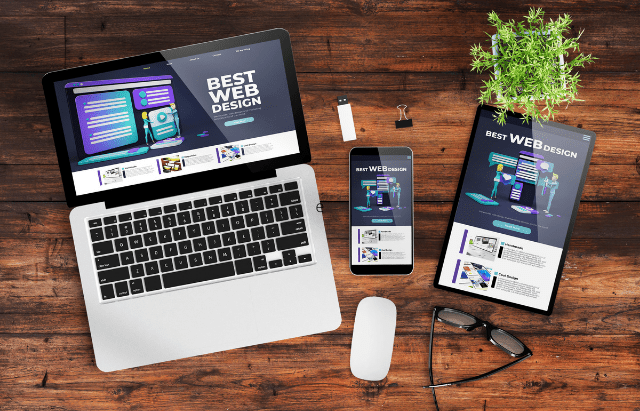
This is your most important digital asset — the one you own and control. It’s open 24 hours a day and is often the first impression a potential customer gets. A slow, outdated, or hard-to-navigate site costs you enquiries every day. A well-built site that clearly explains what you do, where you’re located, and how to contact you does a lot of the selling for you.
Foundation — do this first
SEO is the process of helping your website appear in Google when people search for services like yours. It’s not a trick or a one-time fix — it’s an ongoing process of making your site genuinely useful and relevant. Done well, it brings a steady stream of people actively looking for what you offer. Focus on good content, fast load times, and a properly set-up Google Business Profile. See our guide to SEO for small business in 2026 →
Long-term — compounds over time
If your business serves a local area — a tradie, café, clinic, retailer — this is arguably as important as your website. It’s the listing that appears on Google Maps and in local search results. It’s free to set up, but needs to be properly optimised and kept current with photos, hours, and regular posts. Businesses with complete, active profiles get significantly more local visibility. Read our Google Business Profile guide →
Free — and often overlooked
📱 Social media
Social media is valuable for staying visible and building trust with people who already know about you. It’s much weaker for reaching people who’ve never heard of you — that’s what search is for. Choose one or two platforms your customers actually use, and post consistently rather than sporadically. Don’t spread yourself across five platforms and do all of them poorly.
Useful — pick one or two
💰 Paid advertising (Google Ads / Meta Ads)
Paid ads can deliver leads quickly, which makes them tempting — but they require skill to set up well and can drain your budget fast if managed poorly. Google Ads work well for high-intent searches. Meta Ads work better for building awareness or remarketing. Don’t run paid ads without a clear goal and a way to track conversions.
Paid — needs proper setup
✉️ Email marketing
Your email list is the one audience you truly own — no algorithm can take it away. Email marketing has one of the highest returns of any digital channel, particularly for businesses with repeat customers or longer sales cycles. Even a simple monthly newsletter with useful content and occasional offers can meaningfully improve customer retention. Start building your list from day one.
Underrated — high ROI
Where to begin
A practical starting point for any small business
If you’re starting from scratch or trying to get the basics right, here’s a sensible order of operations. Don’t try to do everything at once.
Get your website right
Make sure it loads fast, works on mobile, clearly explains what you do and where you’re based, and makes it easy to contact you. This is the foundation everything else builds on. A beautiful site that’s slow or confusing is worse than a plain site that works. See our website design services →
Claim and complete your Google Business Profile
Go to business.google.com, claim your listing, and fill it in completely — category, description, photos, opening hours, service area. Ask satisfied customers to leave reviews. This takes a few hours and costs nothing. The return is significant.
Focus on local SEO basics
Make sure your website mentions your location, the services you offer, and your contact details clearly. Create individual pages for your main services. Write genuinely useful content that answers the questions your customers actually ask.
Choose one social platform and be consistent
Post regularly — even once or twice a week is enough. Show your work, share useful tips, and engage with comments. Consistency beats frequency. Three months of regular posts builds more trust than a burst of daily posts followed by silence.
Start collecting email addresses
Add a simple sign-up form to your website with a genuine incentive — a discount, a useful guide, or simply “be the first to hear about specials.” Even 50 people on your list is valuable. It grows over time and becomes more valuable every year.
Only then consider paid advertising
Once your organic presence is solid, paid ads can accelerate things. But if you’re spending on ads and sending traffic to a poor website, you’re wasting money. Fix the foundation first. Learn about our pay-per-lead service →
Myths that cost small businesses time and money
A few things that get repeated often in marketing circles — and why you should be sceptical.
Not sure where to start?
SME Design works with small businesses across Gippsland and beyond — no jargon, no overselling. Just practical advice on what will actually move the needle for your business. See what local businesses say →
Digital marketing offers small business owners a cost-effective, measurable, and flexible way to reach and engage with their target audience.
The ability to track every dollar spent and adjust strategies in real-time provides a level of ROI that traditional marketing simply cannot offer.
It’s time to demystify digital marketing and embrace its potential to transform small businesses into thriving enterprises.